



Types of Doors and Structural Features
Aircraft hangar doors can be designed in various types depending on the area of use and the size of the hangar. The most common types of doors include:
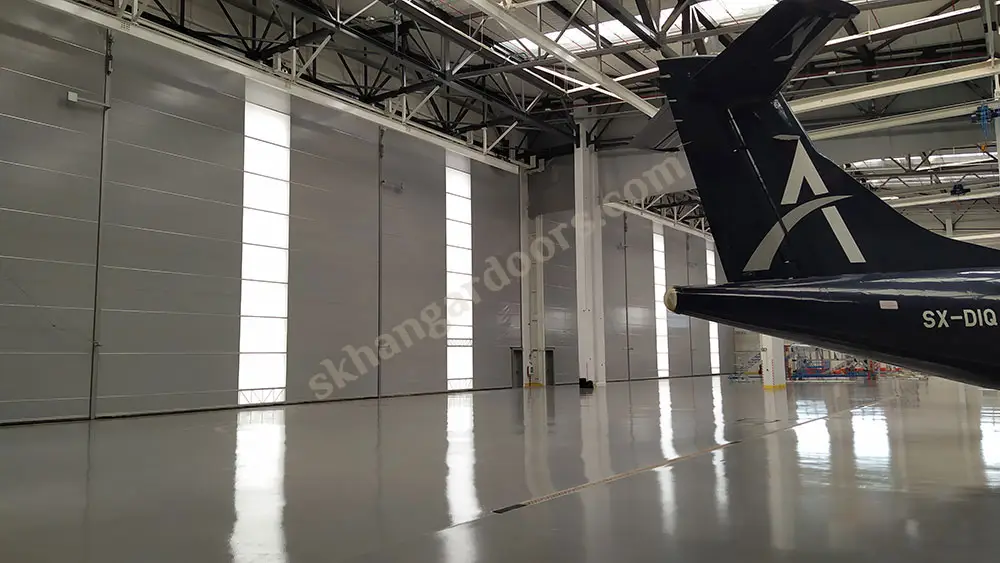
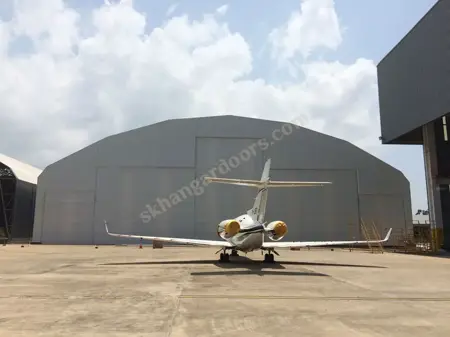
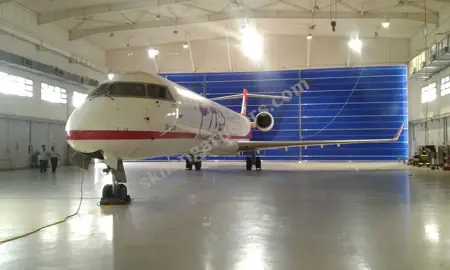
- Folding Hangar Doors Ideal for wide openings, folding hangar doors save space and offer quick opening and closing. They're built to withstand high wind loads and can adapt to various climatic conditions, making them a versatile choice for many hangar environments.
- Sliding Hangar Doors Sliding hangar doors are often preferred for very wide openings. Their modular design allows them to be adapted to almost any desired width. They typically operate on a rail system, providing a reliable and robust opening mechanism.
- Fabric Hangar Doors For large openings where lightness and flexibility are key, fabric hangar doors are an excellent option. They're generally made from durable materials like PVC-coated polyester fabric. These doors offer quick installation and provide economical solutions, particularly for expansive hangar spaces.
- Telescopic Hangar Doors Telescopic hangar doors are an innovative system particularly effective in confined spaces or areas with limited side clearance. Their panels slide into one another, allowing for efficient opening in situations where traditional door types might not be suitable.
Material Selection and Durability
The materials used in hangar doors are crucial in terms of the door’s durability and longevity. Steel, aluminum and high-strength composite materials are typically preferred. Key factors considered in material selection include:
- Wind Resistance Since airports are often in open areas, hangar doors must be resistant to strong winds. Therefore, doors reinforced with steel or similarly durable materials are preferred.
- Insulation Properties To protect aircraft, it is essential to maintain a stable temperature and humidity balance inside. Well-insulated doors enhance energy efficiency while reducing maintenance costs.
- Safety The safety of hangar doors is critical to protecting both the aircraft and personnel. Typically, doors are equipped with safety locking systems, sensors and automatic closing mechanisms.
Automation and Technology Use
Today, automation systems are widely used in aircraft hangar doors. Advanced automation technologies make the opening and closing of doors much faster and safer. Additionally, the ability to control the doors remotely and adjust the opening and closing speeds provides savings in both time and energy.
- Folding Hangar Doors Ideal for wide openings, folding hangar doors save space and offer quick opening and closing. They're built to withstand high wind loads and can adapt to various climatic conditions, making them a versatile choice for many hangar environments.
- Sliding Hangar Doors Sliding hangar doors are often preferred for very wide openings. Their modular design allows them to be adapted to almost any desired width. They typically operate on a rail system, providing a reliable and robust opening mechanism.
- Fabric Hangar Doors For large openings where lightness and flexibility are key, fabric hangar doors are an excellent option. They're generally made from durable materials like PVC-coated polyester fabric. These doors offer quick installation and provide economical solutions, particularly for expansive hangar spaces.
- Telescopic Hangar Doors Telescopic hangar doors are an innovative system particularly effective in confined spaces or areas with limited side clearance. Their panels slide into one another, allowing for efficient opening in situations where traditional door types might not be suitable.
Material Selection and Durability
The materials used in hangar doors are crucial in terms of the door’s durability and longevity. Steel, aluminum and high-strength composite materials are typically preferred. Key factors considered in material selection include:
- Smart Sensor Systems Sensors in automatic hangar doors can detect objects that might obstruct the door from opening or closing. This feature is crucial for both personnel safety and preventing damage to the door.
- Backup Power Systems Hangar doors are often equipped with backup power sources to ensure they can continue functioning even during power outages. This is vital for emergencies, ensuring aircraft can be moved in or out of the hangar when necessary..
Design and Aesthetics
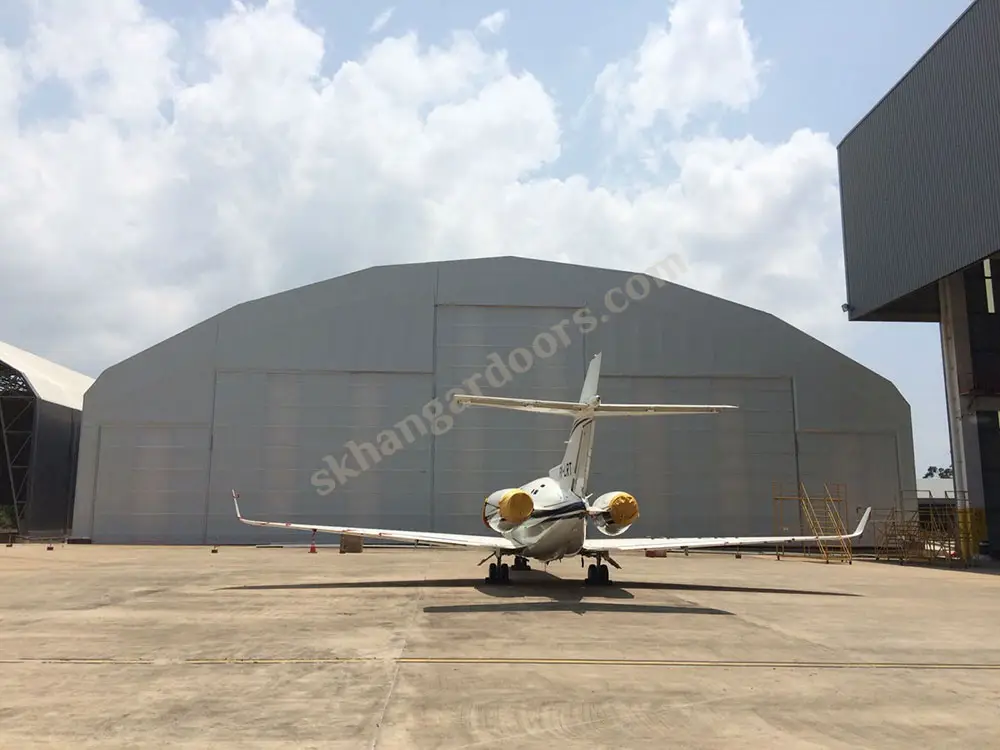
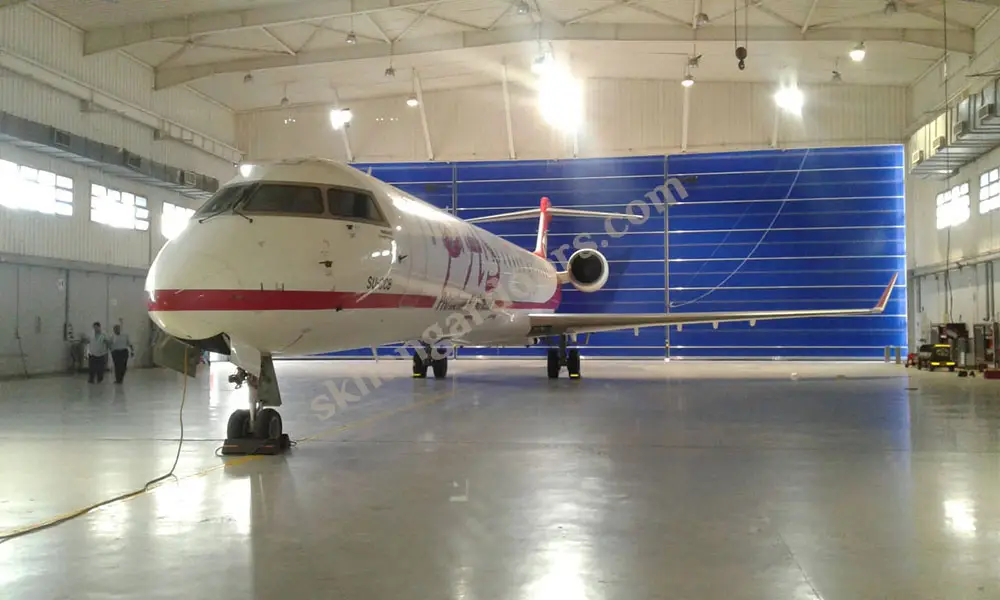
Hangar doors are not only functional but also evaluated for their aesthetic appeal. Especially in private airports or large commercial air transport hubs, doors are expected to have a modern and sleek appearance. Additionally, incorporating company logos or other graphic elements onto the doors is a common design choice.
Maintenance and Costs
Regular maintenance of hangar doors is crucial for both safety and long-term use. Routine maintenance tasks include lubricating moving parts, checking sensors and cleaning the rails. Maintenance costs can vary depending on the type of door, its size and the frequency of use.
Regardless of the type of door, the most cost-effective solution in the long run is to choose doors made of durable materials with good insulation properties. Insulation reduces energy costs, while durable materials and automation systems minimize maintenance requirements.
Conclusion
Aircraft hangar doors offer much more than just allowing large vehicles to enter and exit. Equipped with modern materials and technology, these doors play a significant role in terms of both functionality and aesthetics. When selecting a hangar door, factors such as the area of use, safety requirements and long-term maintenance costs should be considered.
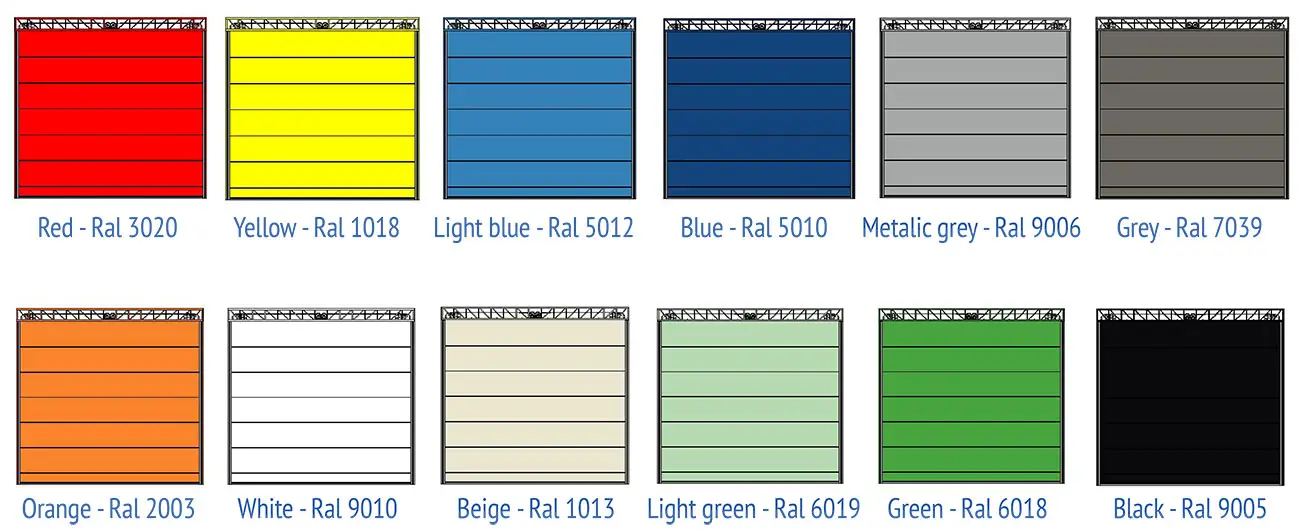
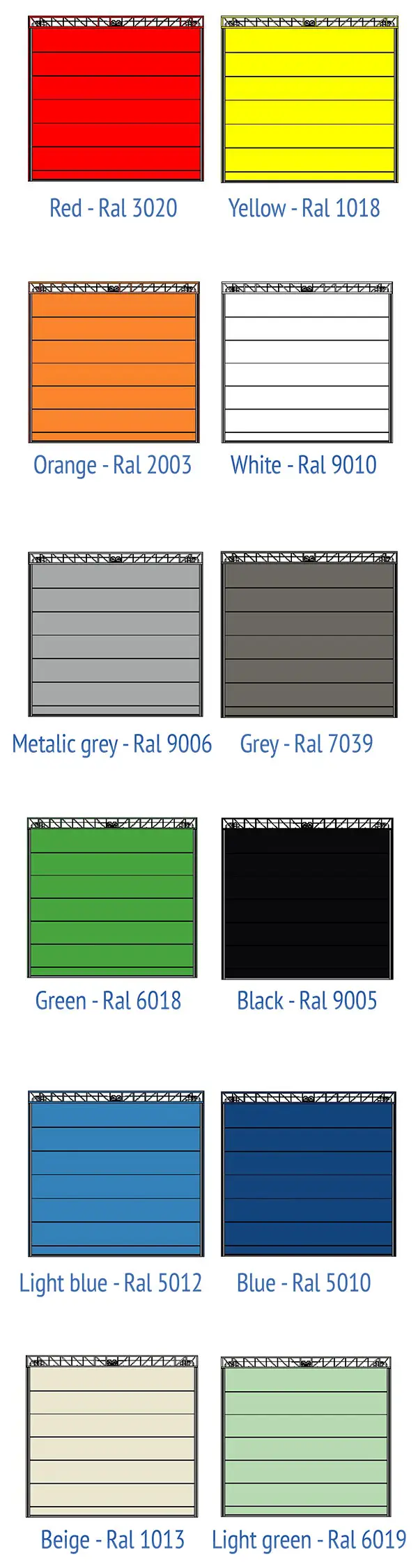
Wide range fabric color is available, All main color at our stock (RAL 9002-9006-1001 -3001 – 5007-6001-7071) (some color is out of stock can be extend delivering time)